Factions
Nobody operates alone in the Age of Echoes. Every faction is a living political organism — pursuing agendas, holding grudges, honoring debts, and demanding consequences. Choose carefully. Walk away carefully.
Three factions operate across all regions. Regardless of where your crew works, these names will come up. They’re the only organizations large enough to maintain continental presence in a fragmented world — and they do it through very different methods.
North America’s largest decentralized resistance network. Autonomous cells united by encrypted manifesto and shared constitutional principles. The CRB doesn’t long for the old America — they despise what replaced it. IRA-inspired tactics, cellular organization, and a burning conviction that the federal government became the very tyranny the Constitution was written to prevent.
Their heartland is the Forgotten States, where Silo 87 anchors their deepest operations. But CRB cells exist in every region — Ghost Cells, Shadow Wing, Liberty Front, Alamo Circuit, Pulse Seekers, River Ghosts. They guard what remains of Lucent Ark’s legacy.
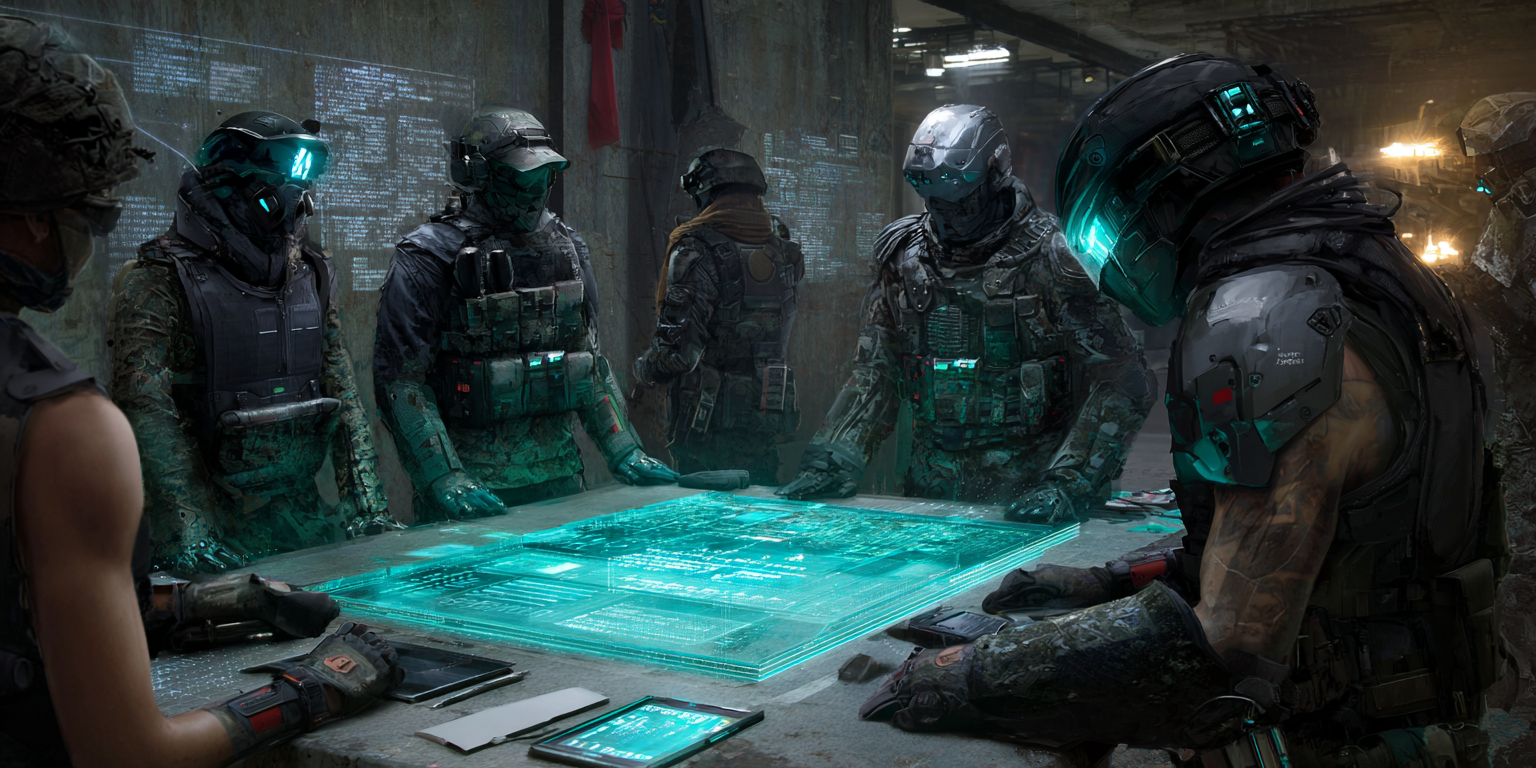
North America’s premier corporate enforcement entity. Where the CRB burns with ideology and the Rougarou channels culture, The Firm applies corporate methodology to violence. Professional. Precise. Contractual. Their named principals — Mr. Ledger, Ms. Quota, Mr. Halberd — run divisions with names like Marginjack, Breakwire, and Signalghost.
The Firm doesn’t care who you are. They care what the contract says. Completion rate is reputation. Discretion is doctrine. If you see them coming, they’ve already decided that part doesn’t matter.

The most enigmatic cross-regional power. Afro-Caribbean syndicate roots, data-Vodou rituals, cyber-augmented traditions that predate the Disjunction. The Rougarou maintains authority through cultural influence, supernatural reputation, and selective enforcement. Their name comes from Cajun folklore — shapeshifters that guard the swamps.
They dominate the Fallen Shore, where the Boo Hags run sub-operations through the drowned districts. But their smuggling routes and ritual networks reach every region. The Rougarou don’t negotiate — they offer, and you accept or you discover why the name makes people quiet.

Aurora-9’s corporations don’t just operate here — they own the sky. The dome cities run on their infrastructure, their surveillance, their rules.
Beneath the corporate domes, resistance takes a dozen forms — from ghost networks in limestone caves to coffee shops that double as revolutionary cells.
The Iron Belt runs on three pillars: corporate profit, machine theology, and enforced order. They don’t always agree on method, but they agree on control.
Water shapes everything on the Fallen Shore. Factions here control flotilla-states, drowned districts, and smuggling routes through the submerged coast. The Wake is strongest here — and the dead have opinions.
The dust hides more than it reveals. The Forgotten States are CRB heartland — everything else operates in their shadow. Sparse population, vast distances, and secrets buried in silos.
NSL survives because everyone needs it to. The only true free city — a neutral ground where factions trade, negotiate, and occasionally murder each other within carefully maintained rules of engagement.
Resistance Never Fully Unifies
In Chrome & Covenant, resistance factions don’t form convenient alliances against the big bad corporation. Cooperation is limited — two or three factions might target a lesser corporate power in a specific Echo, but the resistance will never assemble into a single unified front. The reasons are realistic: ideological disagreements, territorial disputes, personal grudges, competing visions for what comes after.
This is a design choice, not a story limitation. It creates the political friction that makes faction play interesting. Your crew doesn’t choose between good and evil — they choose between competing agendas, each with their own version of justice.
The full faction mechanics — reputation tracking, the FRep system, joining and betrayal rules, the Tension Web, and complete faction dossiers for every group listed above — are in the Factions & Reputation Guide.
Every faction is a door. Walk through it, and the world changes around you.
Explore the Regions The Full Timeline NSL: Your First City