Neutral St. Louis
The only city where all major factions maintain simultaneous presence. Sworn enemies conduct business at adjacent tables. The rules are unwritten. The consequences aren’t.
Before the algorithms, St. Louis was a crossroads city — river trade, rail, diversified industrial base, and a population stubborn enough to survive what the coasts could not. When the Disjunction shattered the old order, St. Louis didn’t collapse. It adapted. River barges replaced supply chains. Local manufacturing filled the gaps megacorps left behind. For a few chaotic years, the city ran on barter, grit, and the geographic luck of sitting at the confluence of two major rivers.
Then the Algorithmic Dominion arrived.
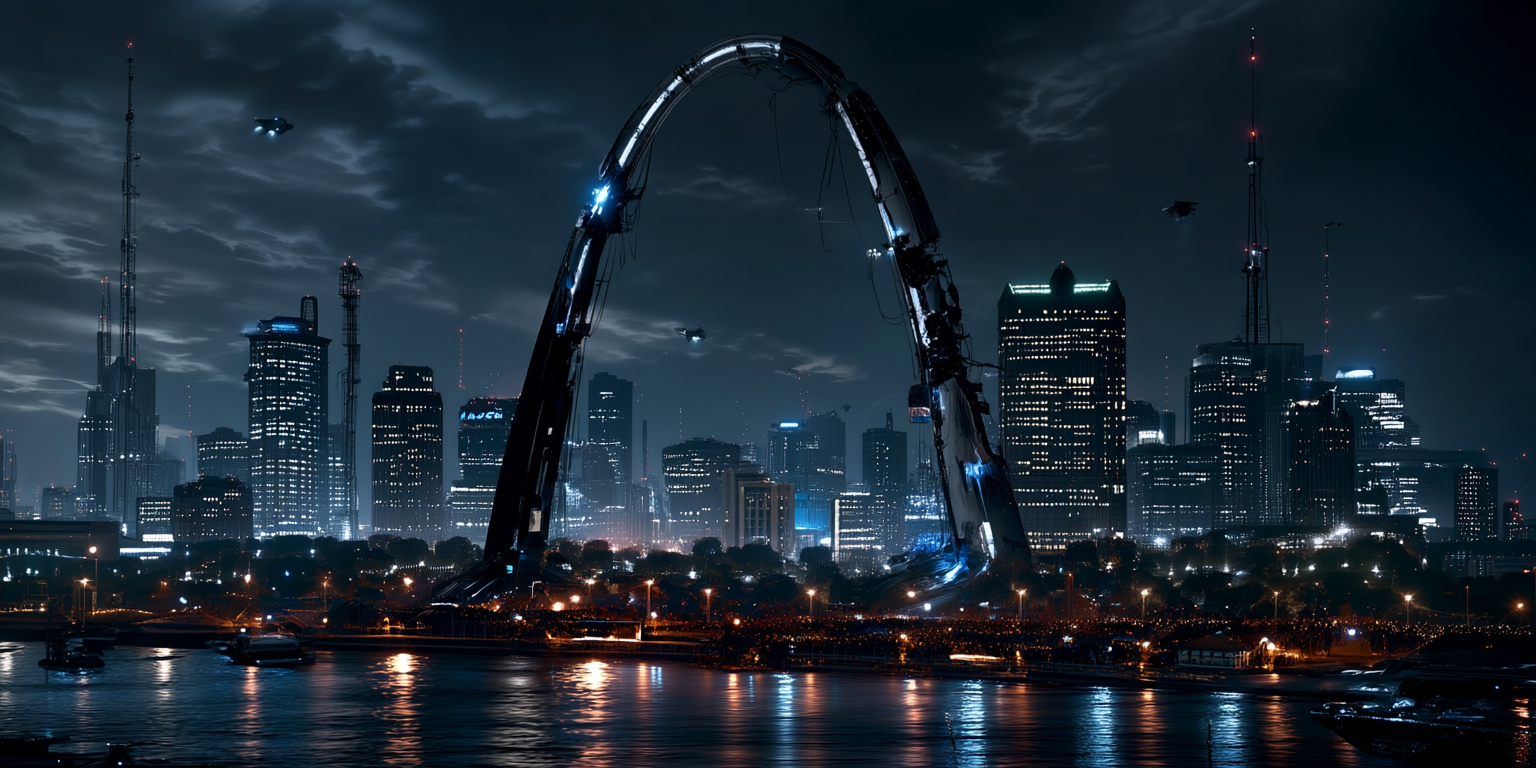
Not by conquest — by optimization. The Dominion deployed predictive AI systems that made the city’s infrastructure more efficient than anything human management could achieve. Traffic, power, water, waste — all optimized. The population accepted the trade: convenience for surveillance, efficiency for autonomy. For thirteen years, the Dominion’s algorithms governed a city that forgot what unpredictability felt like.
The Eleven-Day Strike
At 0347 on March 15, 2074, twenty-seven Liberty Front signal warfare teams activated Jefferson chaos pulses simultaneously across St. Louis. Every major Dominion control node went blind at once. For the first time in thirteen years, the prediction systems had nothing to predict. Traffic lights cycled at random. Surveillance feeds dissolved into static.
Eleven days of chaos. Then negotiation. What emerged was something no one expected — a city that chose to be neutral. Not out of peace, but out of pragmatism. Every faction needed St. Louis to function. The only way it functions is if nobody owns it.
The amphitheater beneath Accord Hall seats exactly twelve representatives. Each chair connects to the central signal array — a crystalline display matrix streaming real-time data from across NSL. Power distribution, population movement, economic flows, Mesh activity. The Compact isn’t a government. It’s an operating agreement. Break it, and every faction in the city turns on you simultaneously.
The Three Unwritten Rules
Not laws — no courts, no judges. Operational parameters that determine when the Neutral St. Louis Security Consortium responds and when it looks the other way.
Every signal transmission in NSL creates an eleven-second window where the Dominion’s quantum prediction matrices fail. During those eleven seconds, human agency overrides algorithmic certainty. The consequences of that brief freedom define life in the last neutral city. Operators who understand the window use it. Operators who don’t become predictable — and in NSL, predictable means dead.
In January 2081, the Iron Belt tested whether NSL’s neutrality was a political arrangement or a geographic fact. An Iron Winter had pushed south — harsh enough to close the northern trade routes and desperate enough to make St. Louis’s granaries look like a solution.
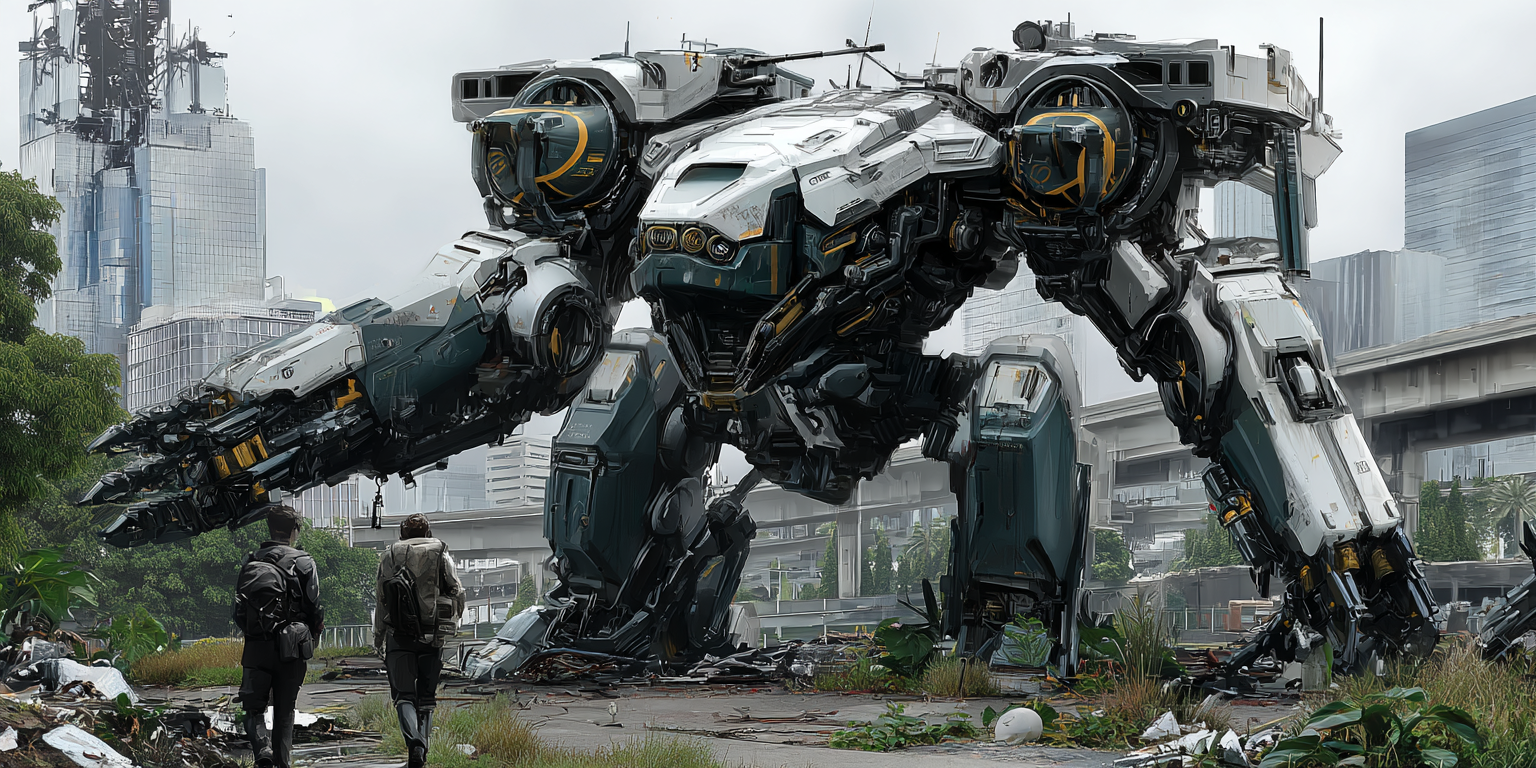
They sent a mechanized convoy, three war beasts, and the only Iron Wyrm mech-class walker ever deployed west of the Mississippi. NSL’s defenders — a patchwork of every faction with something to lose — broke the siege in seventy-two hours. The Iron Wyrm’s wreckage still sits in the Margin as a monument. Everyone who walks past it understands the message: neutrality isn’t weakness. It’s the thing every faction will fight to protect.
NSL organizes into six districts, each with its own character, economy, and level of danger. The deeper you go from the Pale’s diplomatic veneer toward the Margin’s edge, the less the Unwritten Rules apply.
Glass towers reflecting performative professionalism. Accord Hall’s limestone facade. Corporate executives discussing trade agreements while encrypted communiques ping their MeshLenses from the underground markets beneath their feet. The surface maintains diplomatic theater — clean and orderly. Scratch the paint and it bleeds.
Information flows like currency. Glass towers rise from converted warehouses, facades bristling with signal relays and automated trading displays. Open plazas accommodate rapid foot traffic between broker offices. Underground passages connect discrete meeting spaces. Deals close faster than handshakes.
Where the Mississippi meets the city’s industrial needs. Concrete piers, rusted crane towers, loading equipment that predates the Disjunction. Three parallel zones: active waterfront, warehouse district, and the residential blocks where dock workers and smugglers share the same buildings.
NSL’s largest district — interconnected neighborhoods built around flood-adapted infrastructure. Multiple elevation levels, from street-level housing blocks to elevated walkways. This is where most of the population actually lives. Not glamorous. Not safe. Functional.
The most orderly facade. Wide streets, pristine sidewalks, coordinated lighting. Beneath it: three underground levels where the real business happens. The Lumen Institute operates here — NSL’s most sophisticated intelligence operation disguised as a research facility. The Arch Quarter’s surface is a mask. Everyone knows. Nobody says.
NSL’s outermost ring, where the city’s neutrality dissolves into hostile reality. External powers maintain trade missions and intelligence operations. The NSLSC processes the constant flow of arrivals. Beyond the Margin: the Four Approaches — each direction hostile in its own way. The Iron Wyrm wreckage sits here as a reminder.
NSL is the starter city because it contains everything. Every major faction maintains presence. Every regional conflict has representatives. The CRB’s Liberty Front operates three tables from Dominion compliance officers. The Firm takes contracts from anyone who can pay. Rougarou smuggling routes pass through the Landing’s docks.
A crew starting in NSL can take jobs from any faction, explore any allegiance, and discover what the world looks like before committing to a region. It’s the one place where “we work for whoever pays” isn’t just a philosophy — it’s the city’s operating system.
The full NSL City Guide includes 83,000+ words of content: named establishments for every district, the complete Arch Quarter underground, the Lumen Institute’s three operational layers, the Four Approaches, Lambert-NSL International Airport, the Limestone Graves, encounter tables, and dozens of mission seeds.
The last neutral ground. The only city where everyone’s welcome and nobody’s safe.
Meet the Factions The Four Regions The Full Timeline